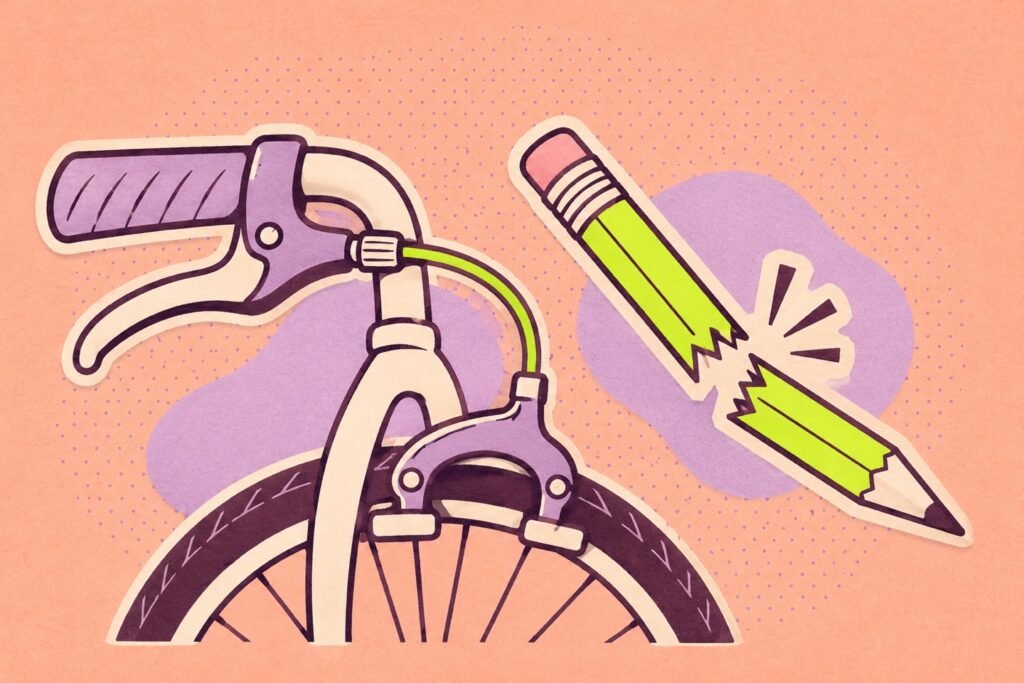
Use brake to mean slow or stop using a brake. Use break to mean damage, interrupt, or stop for a pause. The vehicle’s brake helps it slow down. A lunch break gives you a pause.
Compare the verbs and nouns
- “The cyclist had to brake at the crossing.” The verb means slow or stop.
- “The mechanic replaced the front brake.” The noun names a device for slowing or stopping.
- “The clasp can break if you force it.” The verb means come apart or stop working.
- “We took a break after the first rehearsal.” The noun names a pause.
The past forms differ too
The driver braked at the crossing. The clasp broke in the bag. The past participle of break is broken.
Try it
“You’ll need to ___ before the bend. When we reach the café, we’ll take a ___.”
Show the answer
Use brake for slowing the vehicle and break for the pause at the café.
See also Bare vs. Bear.