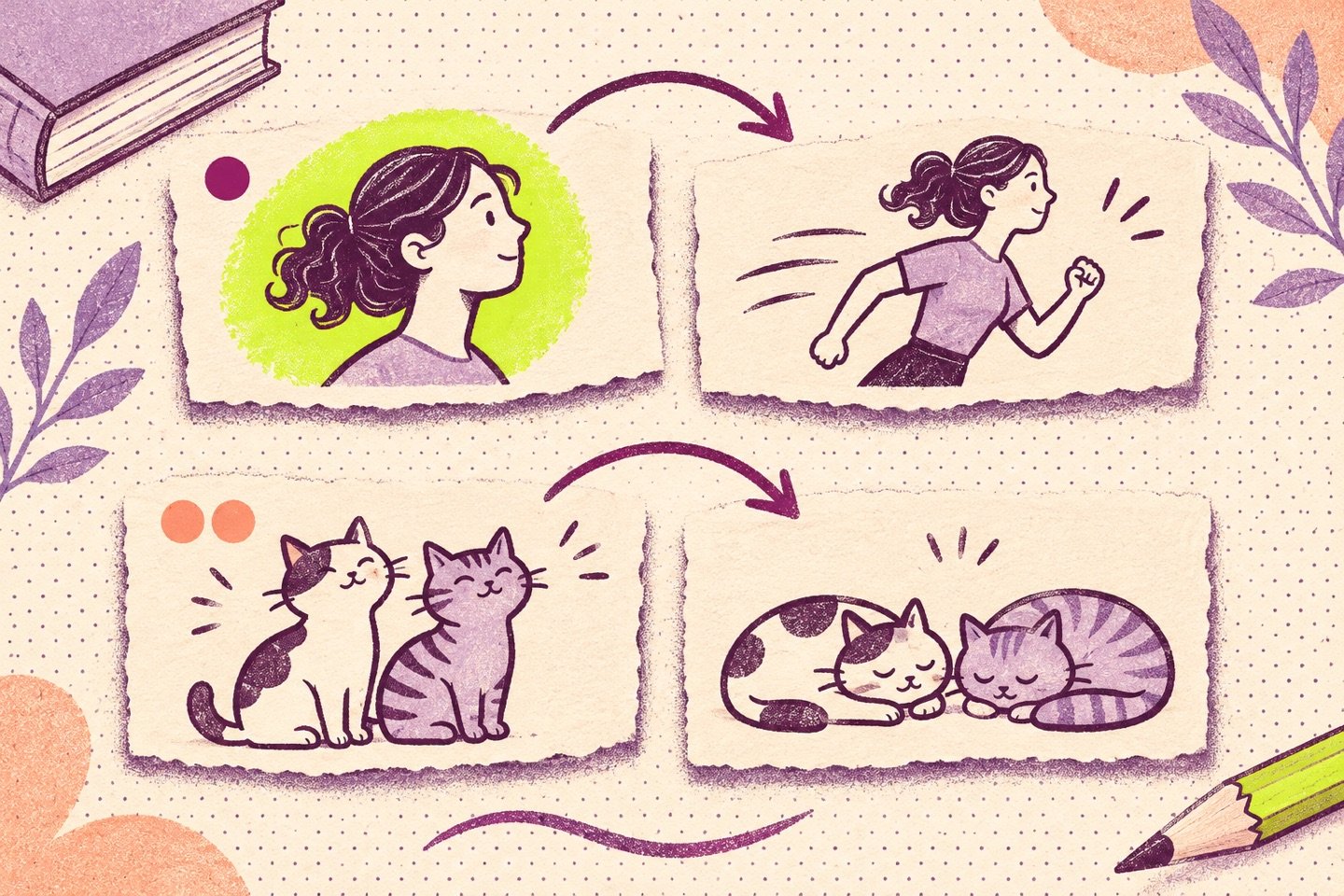
Lay means to put someone or something down. It takes a direct object, the word or group of words that names whom or what the action affects. Lie means to recline or rest in a position. In that sense, it describes what the subject does or where the subject rests, and it takes no direct object.
Lay means to place something
I lay my keys on the hall table every evening. What do I lay? My keys is the direct object. The phrase on the hall table tells you where I put them. A pronoun can be the object too, as in Lay them on the table.
Lie means to recline or rest
The dog lies by the door every evening. The dog is the subject. By the door tells you where the dog rests. A thing can lie somewhere too. The keys lie on the hall table until morning.
The verb forms
| Form | Lay (place) | Lie (recline or rest) |
|---|---|---|
| Base form | lay | lie |
| Present with he, she, or it | lays | lies |
| Simple past | laid | lay |
| Past participle | laid | lain |
| -ing form | laying | lying |
Tricky forms in context
Lay can name a present action of placing or a past action of reclining. After a swim, Ben laid his damp towel on the sand and lay down beside it to read. The towel had lain in the sun for half an hour when the wind lifted a corner. He weighed it down with a sandal that was lying beside his bag.
After has, have, or had, use the past participle, as in has laid the towel out or has lain in the sun. After did, use the base form. Did Ben lay his towel on the sand? Did he lie down?
There’s also a separate verb lie meaning to tell an untruth. It shares lies and lying with lie meaning to recline, and it uses lied for both the simple past and the past participle. I lied about losing the keys and I have lied about it before both describe dishonesty. Merriam-Webster’s guide to lay and lie.
Practice with six examples
- Edit the verb for standard written English. You can lay down on the bench.
- Find the direct object of lays. Mina lays a wool runner across the landing.
- Put both verbs in the simple past. I lay my book on the nightstand and lie down.
- Fill in the blank. The unopened parcel has ___ on the bench since Monday.
- Choose laying or lying for each blank. Jo is ___ a coat across the bench while the dog is ___ beneath it.
- Cam knew he hadn’t called the plumber but said he had. Complete the sentence using the simple past of lie. Cam ___ about the call.
Show answers and explanations
- You can lie down on the bench. The person reclines, so use the base form lie after can. On the bench gives the location.
- A wool runner. It names what Mina places. Across the landing tells you where she puts it.
- I laid my book on the nightstand and lay down. The book is what you placed, so use laid. You reclined, so use lay, the past of lie.
- The unopened parcel has lain on the bench since Monday. The parcel has been resting there. Use the past participle of lie after has.
- Jo is laying a coat across the bench while the dog is lying beneath it. Jo is placing the coat. The dog is resting.
- Cam lied about the call. Use the simple past lied for telling an untruth.
A quick check as you write
When you see lay in a past-tense sentence, try reclined or rested. If you mean placed, write laid.
- Review how verbs express time. English Tenses.
- Practice spotting other words that are easy to mix up. Commonly Confused Words in English.