

Strategies for Teaching Grammar to Kinesthetic Learners
Creating an engaging learning environment for kinesthetic learners, especially in the context of grammar—a subject often perceived as abstract and static—presents a unique set of challenges and opportunities. Kinesthetic learners thrive on movement and hands-on activities, making traditional lecture-based teaching methods less effective. This guide explores innovative strategies explicitly tailored to engaging kinesthetic learners in grammar lessons, transforming their learning experience from mundane to dynamic.
Kinesthetic learners, who excel through touch and movement, benefit significantly from a more active and interactive approach. This learning style is characterized by a preference for physical activity over sitting still, learning by doing rather than observing, and a tendency to excel in physical tasks. In teaching grammar to kinesthetic learners, the challenge lies in translating the abstract rules and structures of language into tangible, hands-on experiences that captivate and retain their interest.
This guide’s objective is to illuminate strategies that leverage the strengths of kinesthetic learners, transforming the grammar learning experience into one that is not only effective but also enjoyable. By incorporating movement, tactile experiences, and interactive activities into grammar lessons, educators can create a dynamic learning environment that caters to kinesthetic learners and enriches the classroom experience for all students.

Part 1: Understanding Kinesthetic Learners
To effectively teach grammar to kinesthetic learners, it’s crucial first to understand the characteristics that define this learning style and how it impacts their engagement with the subject matter. Kinesthetic learners are not content with passive observation; they crave interaction and direct involvement in learning.
Characteristics of Kinesthetic Learners
- Preference for Movement: Kinesthetic learners struggle to remain stationary for prolonged periods. They learn best when movement is integrated into the activity, allowing them to engage physically with the material.
- Hands-on Approach: They excel in environments where they can manipulate objects, construct models, or touch and handle materials.
- Learning by Doing: Kinesthetic learners thrive on direct involvement. They prefer to learn through trial and error rather than passively absorbing information.
Adapting Grammar Instruction
Teaching grammar to kinesthetic learners requires a departure from traditional methods. This approach favors embedding grammar lessons in physical and interactive activities. This adaptation not only aids in capturing their attention but also facilitates more profound understanding and retention of grammatical concepts.
- Incorporate Movement into Lessons: Transform static grammar exercises into dynamic activities. For instance, use classroom space for games that involve moving to different stations representing parts of speech or grammatical structures.
- Utilize Tactile Learning Tools: Employ physical objects as teaching aids. Building sentence structures with blocks or creating verb tense timelines with physical markers can provide the tangible context kinesthetic learners need.
- Engage with Real-life Applications: Encourage learners to apply grammatical concepts through role-playing scenarios or storytelling, where they can act out grammatical rules or create stories that emphasize specific grammar points.
Strategies for Teaching Grammar to Kinesthetic Learners
Adopting specific strategies tailored to the kinesthetic learning style can significantly enhance the effectiveness of grammar instruction. These strategies focus on converting abstract grammatical concepts into concrete learning experiences, providing kinesthetic learners with the active engagement they need to succeed.
- Grammar Games: Design games that require physical movement and application of grammatical rules. For example, a verb tense relay race where students must categorize verbs into past, present, and future tense under time pressure encourages physical activity and cognitive processing.
- Interactive Writing Boards: Use large writing surfaces for collaborative writing and correction exercises. This allows learners to engage with sentence construction and editing processes physically.
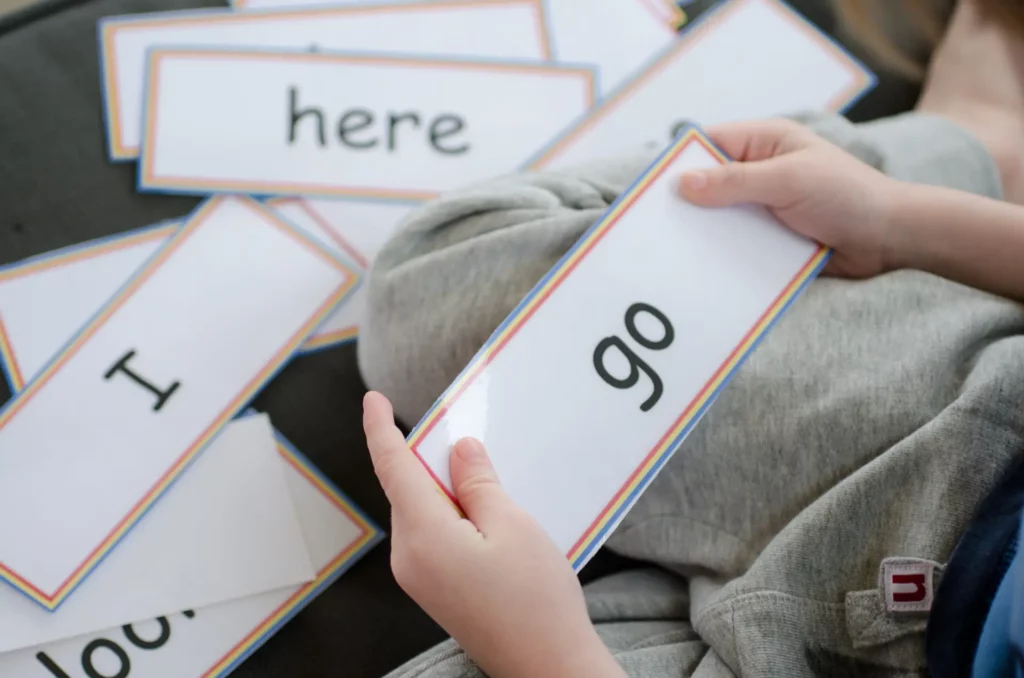
- Construction and Deconstruction: Engage students using word cards or tokens to build sentences. This hands-on approach to sentence structure emphasizes the physical manipulation of language components, catering to the kinesthetic learner’s preference for tactile interaction.
By understanding the unique needs of kinesthetic learners and implementing teaching strategies that align with their learning preferences, educators can make grammar instruction more accessible, engaging, and effective for all students. This approach enhances the learning experience for kinesthetic learners and introduces an element of diversity and dynamism into the grammar curriculum, benefiting the entire classroom.

Part 2: Implementing Kinesthetic Techniques in Grammar Lessons
Teaching grammar to kinesthetic learners involves moving beyond traditional lecture methods to incorporate movement and tactile experiences into lessons. This approach can significantly enhance engagement and retention for learners who thrive on physical activity and hands-on learning. Here, we explore strategies educators can use to adapt grammar lessons for kinesthetic learners.
Active Learning Spaces
- Flexible Classroom Layouts: Discuss the importance of creating a flexible classroom environment where furniture can be easily moved to facilitate group activities, role-playing, and grammar games.
- Utilizing Classroom Space: Suggestions for activities that use different classroom areas for learning stations or grammar circuits, allowing students to move between them to complete tasks related to parts of speech, sentence structure, and punctuation rules.
Grammar Games and Activities
- Interactive Grammar Games: Examples of grammar games that involve physical activity, such as verb tense relay races, preposition scavenger hunts, and adjective-adverb charades, to reinforce grammatical concepts in a fun, engaging manner.
- Role-Playing and Dramatization: How role-playing scenarios and dramatization of sentences or grammatical structures can help kinesthetic learners understand complex grammar rules through acting out and movement.
Hands-on Learning Materials
- Manipulatives for Grammar: Using manipulatives like word and punctuation cards, sentence building blocks, and grammar construction sets that students can physically manipulate to form sentences, identify parts of speech, and correct grammatical errors.
- Crafting and Building: Projects that involve creating grammar posters, assembling grammar flip books, or building grammar models to visualize and internalize grammatical concepts.
Incorporating Technology and Multimedia
- Interactive Grammar Apps: Review educational apps and software that encourage interaction through touch screens or physical movement, providing immediate feedback and reinforcing grammar lessons in a kinesthetic-friendly manner.
- Video and Animation: Utilizing short video clips or animations that require students to act out or mimic grammatical concepts, followed by activities that involve applying these concepts in physical or digital creations.
Real-world Grammar Exercises
- Outdoor Learning Experiences: Ideas for taking grammar lessons outside the classroom, where students can engage in grammar-related exercises in a natural or community setting, making real-world connections.
- Physical Response to Written Work: Techniques for encouraging physical responses to grammar corrections, such as using gestures to indicate punctuation marks or walking through sentence diagrams, to deepen understanding and recall of grammatical structures.
Engaging the Kinesthetic Learner
- Feedback and Revision: Emphasize the importance of incorporating movement into the feedback and revision process. Allow students to physically correct or re-enact written work to understand grammar corrections better.
- Assessment Through Action: Ideas for assessing kinesthetic learners’ understanding of grammar through performance-based tasks, presentations, or projects requiring active grammatical knowledge demonstration.
Kinesthetic learners benefit from an active, engaging approach to grammar instruction incorporating movement, tactile experiences, and real-world applications. By integrating these strategies into grammar lessons, educators can provide a dynamic learning environment that accommodates and celebrates their students’ diverse learning styles. This approach not only aids in mastering grammatical concepts but also fosters a more inclusive, interactive, and enjoyable learning experience for all students.
Part 3: Implementing Kinesthetic Grammar Activities
Kinesthetic learners thrive on movement and doing, which can be challenging in the context of grammar instruction—a subject traditionally taught in more passive and abstract ways. However, by incorporating physical activity into grammar lessons, educators can effectively engage kinesthetic learners, making abstract concepts tangible and memorable. This section explores strategies and activities designed to bring grammar to life for students who learn best through movement and experience.
Role-Playing and Simulation
- Grammar in Action: Create scenarios where students must use specific grammatical structures in role-playing situations. For instance, setting up a mock restaurant can help practice question forms and polite requests.
- Act Out Verbs and Adjectives: Have students embody verbs and adjectives. This could involve acting out actions like “run” or “jump” and emotions or characteristics like “happy” or “slow.”
Grammar Games
- Conjugation Relay Races: Set up relay races where students must conjugate verbs correctly before running to tag the next teammate. This can be adapted for tense reviews, irregular verbs, and more.
- Preposition Obstacle Courses: Design obstacle courses where students must follow instructions emphasizing prepositions of place, such as “Go under the table,” “Turn right at the chair,” etc.
Interactive Grammar Stations
- Punctuation Sorting: Use physical cards with sentences missing punctuation. Students move to different stations to “fix” sentences by adding the correct punctuation marks.
- Parts of Speech Sorting: Create a physical sorting activity where students move sentence strips into designated areas based on the primary part of speech or grammatical structure featured.
Building and Crafting
- Grammar Construction Sets: Utilize blocks or other construction materials where each block represents a different part of speech. Students build sentences by physically assembling the blocks in the correct order.
- Sentence Scrambles: Provide sets of words on individual pieces of paper or magnets, and have students physically rearrange them to form correct sentences on a board or table.
Kinesthetic Grammar Walks
- Grammar Hunt: Organize a grammar scavenger hunt around the school or classroom where students must find and correct grammatically incorrect sentences posted around.
- Syntax Pathways: Design pathways or tracks on the floor where students walk the path of a sentence, stepping on words in the correct order and adjusting for grammar rules as they go.
Feedback and Reflection
- Active Review Sessions: After activities, engage students in movement-based review games, like throwing a ball at each other while asking grammar questions, to reinforce learning.
- Kinesthetic Reflection: Encourage students to reflect on their learning through movement-based activities, such as creating a dance or series of actions summarizing a grammar rule they’ve learned.
By integrating these kinesthetic activities into grammar instruction, teachers can offer a dynamic and inclusive learning environment catering to their students’ diverse needs. These activities enhance engagement and retention for kinesthetic learners and enrich the learning experience for the entire class, making grammar instruction more interactive and enjoyable.

Part 4: Integrating Technology and Real-World Projects
In today’s digital age, leveraging technology and real-world applications can significantly enhance the learning experience for kinesthetic learners by providing interactive and hands-on opportunities to explore grammatical concepts. This section explores strategies to incorporate technology and project-based learning into grammar instruction, making lessons more engaging and relevant for students who thrive on movement and practical activities.
Incorporating Interactive Technology Tools
- Grammar Apps and Games: Introduce educational apps designed to reinforce grammar skills through interactive exercises and games that require students to physically interact with the content, such as dragging and dropping parts of speech or constructing sentences in a timed challenge.
- Virtual Reality (VR) and Augmented Reality (AR): Use VR and AR apps to create immersive learning experiences where students can explore grammatical structures in simulated environments. For example, students can take virtual tours and describe scenes using target grammatical constructs.
- Interactive Whiteboards: Use interactive whiteboards for collaborative exercises, such as sorting words into categories, matching subjects with predicates, and rearranging words to form correct sentences. Students can physically move elements on the board.
Engaging with Real-World Projects
- Creating a Class Blog or Newsletter: Assign students roles to produce a regular class blog or newsletter. Students use grammar skills to write articles, conduct interviews, and edit submissions. This project encourages active participation and responsibility for the clarity and correctness of their written content.
- Scriptwriting and Performances: Have students write scripts for plays, skits, or video blogs incorporating specific grammatical structures. Performing these scripts in class or recording them integrates kinesthetic activity with grammar practice.
- Community-Based Projects: Involve students in community-based projects, such as writing letters to local newspapers, creating informational brochures for community centers, or developing storybooks for younger students. These activities provide a practical application for grammar skills and connect learning with real-world impact.
Best Practices for Implementation
- Differentiate Instruction: Recognize that kinesthetic learners’ preferences and learning styles may vary. Offer a range of technology tools and project options to cater to diverse interests and skill levels.
- Provide Clear Instructions and Expectations: When introducing new technology or projects, ensure clear instructions and scaffold the activities to guide students through learning. Establish criteria for grammar accuracy and provide rubrics for assessment.
- Encourage Reflection and Revision: Incorporate stages for reflection and revision in projects, prompting students to identify and correct grammatical errors. Use peer review sessions and teacher feedback to refine students’ work.
- Integrate Movement with Learning: Even in technology-driven activities or writing projects, find ways to incorporate physical movement, such as acting out parts of speech, walking through sentence structures, or using body movements to represent punctuation marks.
Integrating technology and real-world projects into grammar instruction for kinesthetic learners aligns with their learning preferences and prepares them for the practical application of grammar skills outside the classroom. By making grammar instruction dynamic, interactive, and relevant, educators can foster a deeper understanding and appreciation of the language, encouraging students to become confident and proficient communicators.

Part 5: Integrating Technology and Kinesthetic Learning
Technology offers innovative avenues to engage kinesthetic learners in today’s digital age grammar lessons. Integrating technology caters to their preference for movement and tactile experiences and prepares them for a technology-driven world.
- Interactive Grammar Apps: Utilize apps designed for grammar learning that require students to drag and drop parts of sentences into correct positions, match words with definitions by physically moving the tablet or smartphone, or even ‘walk’ through sentence structures using AR (Augmented Reality) and VR (Virtual Reality) technologies.
- Online Collaborative Boards: Tools like Padlet or Jamboard can encourage students to contribute to collective grammar exercises. By physically moving to interact with a shared digital space, learners can engage more deeply with the material.
- Gamification and Grammar: Implement gamified learning platforms that allow for movement, such as spelling and grammar games that require physical activity to select the correct answer. These can be particularly effective in making learning engaging and dynamic.
By leveraging technology, educators can create an immersive learning experience that resonates with kinesthetic learners, making the abstract rules of grammar tangible and interactive.
Conclusion
Teaching grammar to kinesthetic learners presents unique challenges but also offers the opportunity to innovate and rethink traditional teaching methods. Educators can create a more inclusive and effective learning environment by embracing strategies that align with their learning preferences—incorporating movement, tactile experiences, real-life applications, collaborative learning, and technology. These approaches benefit kinesthetic learners and can enhance the learning experience for all students by introducing variety and dynamism into grammar lessons.
The key to success lies in the educator’s willingness to adapt and integrate diverse teaching strategies that cater to the varied learning styles within their classroom. As we move forward in an increasingly digital and interactive world, integrating technology in teaching grammar to kinesthetic learners addresses their immediate learning needs and equips them with the skills to navigate the future effectively.
Teaching grammar to kinesthetic learners involves exploration, innovation, and adaptation. By recognizing these learners’ unique strengths and challenges and employing a range of strategies to meet their needs, educators can unlock every student’s full potential, fostering a love for language and a strong foundation in grammar that will serve them for years to come.

Further Exploration
For those eager to dive deeper into the intricacies of English, countless resources await. From comprehensive grammar guides to interactive language learning platforms, the tools at your disposal are more accessible than ever. Engage with these materials, challenge yourself with new exercises, and remain curious and open to discovery. We offer a line of comprehensive grammar and punctuation courses and feature a mastery quiz bundle to cement your further mastery of grammar and punctuation. Feel free to access the endorsed resources below to enhance your learning experience.


