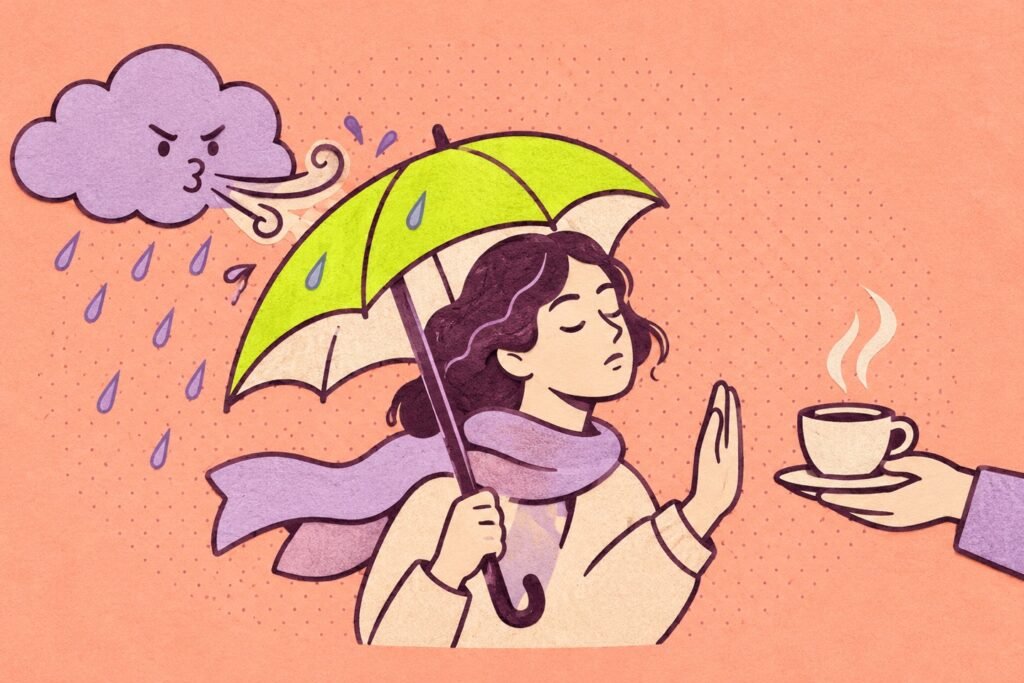
Adverse describes an unfavorable condition or outcome. Averse describes a person or group reluctant to do or accept something. The usual patterns are adverse weather and averse to risk.
Adverse conditions and averse to change
- “The crew postponed the survey because of adverse weather.” The conditions worked against the crew. The same meaning appears in adverse effects and adverse consequences.
- “The committee was averse to changing the schedule.” The committee was reluctant to make the change. Averse to commonly takes a noun or an -ing form.
Write risk-averse for someone who avoids risk
A risk-averse investor prefers to avoid risk. An adverse outcome is an unfavorable result. Ask whether you’re describing someone’s attitude or a circumstance they face.
Try it
“The pilot was ___ to flying in ___ weather.”
Show the answer
Use averse for the pilot’s reluctance and adverse for the unfavorable weather.
For more pairs that differ by a letter or two, see the guide to confusing words.