
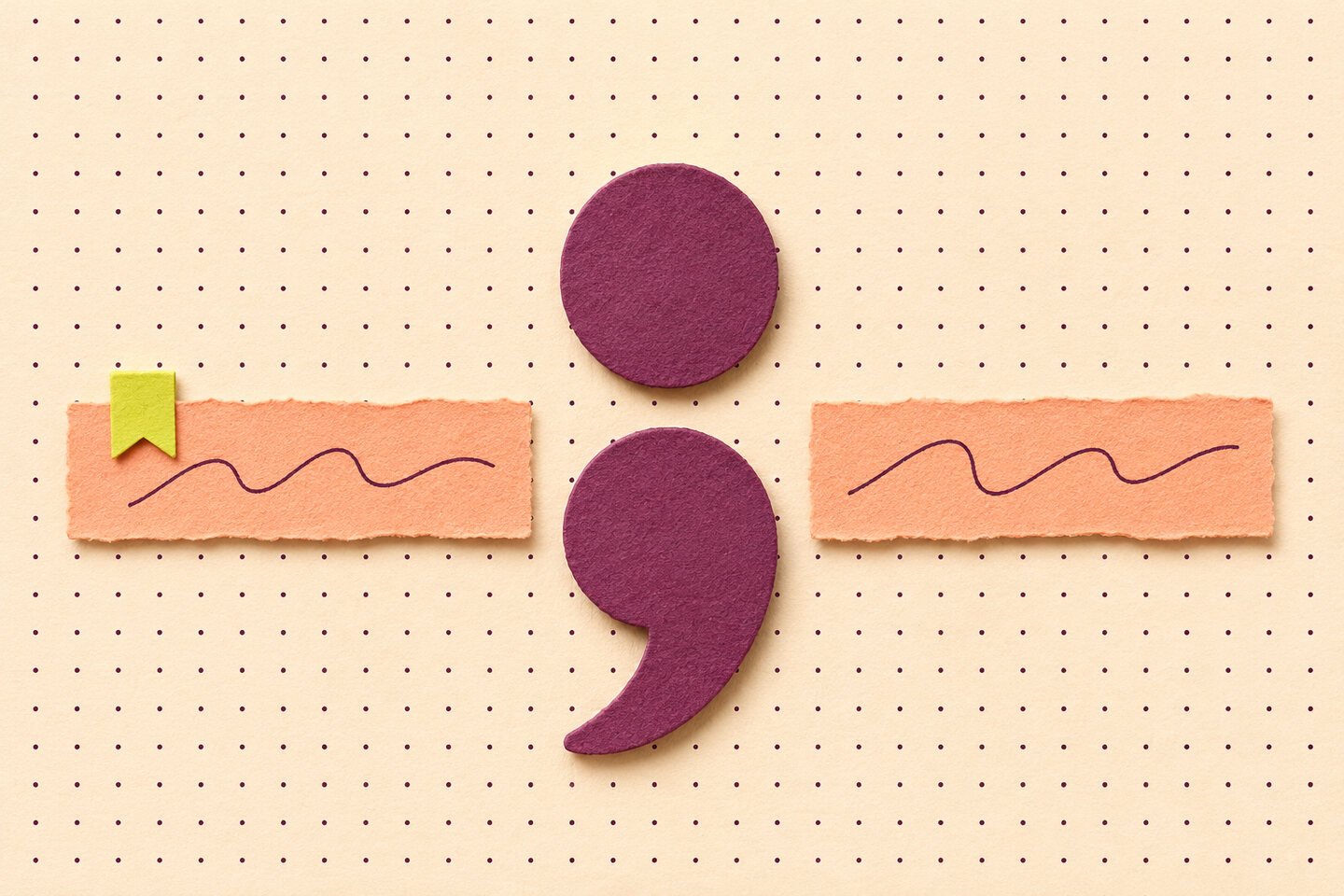
A semicolon (;) links closely related independent clauses or separates list items whose boundaries would otherwise be unclear. In The wind dropped; the ferry left, both clauses can stand as sentences, but the semicolon keeps the events together.
How to recognize it
For a sentence join, check whether each side could stand alone. If the second begins with a transition such as however, check the rest of that clause too. In a list, ask whether semicolons help readers see which details belong to each item.
Examples explained
The forecast improved; however, the crew waited.
However signals contrast but isn’t a coordinating conjunction. The semicolon separates the clauses; the comma sets off the transition.
The route stops in Albany, Oregon; Salem, Oregon; and Tacoma, Washington.
The commas keep each city with its state. The semicolons separate the three stops.
Common mix-up
A semicolon does not normally attach a dependent clause or introduce a list. Compare We packed three items: a map, a light, and a radio. The colon announces what follows.
Explore more detail and examples
The tide was rising. We turned back and The tide was rising, so we turned back are alternatives to The tide was rising; we turned back. A comma alone would not give the clauses a clear boundary.
Quick check
Which mark belongs in the blank if you keep one sentence? The front door was locked ___ however, the side door was open.
Reveal the answer and explanation
Use a semicolon: The front door was locked; however, the side door was open. A period would work if you started a new sentence with However.
Related terms
independent clause · colon · comma · sentence-boundary errors


