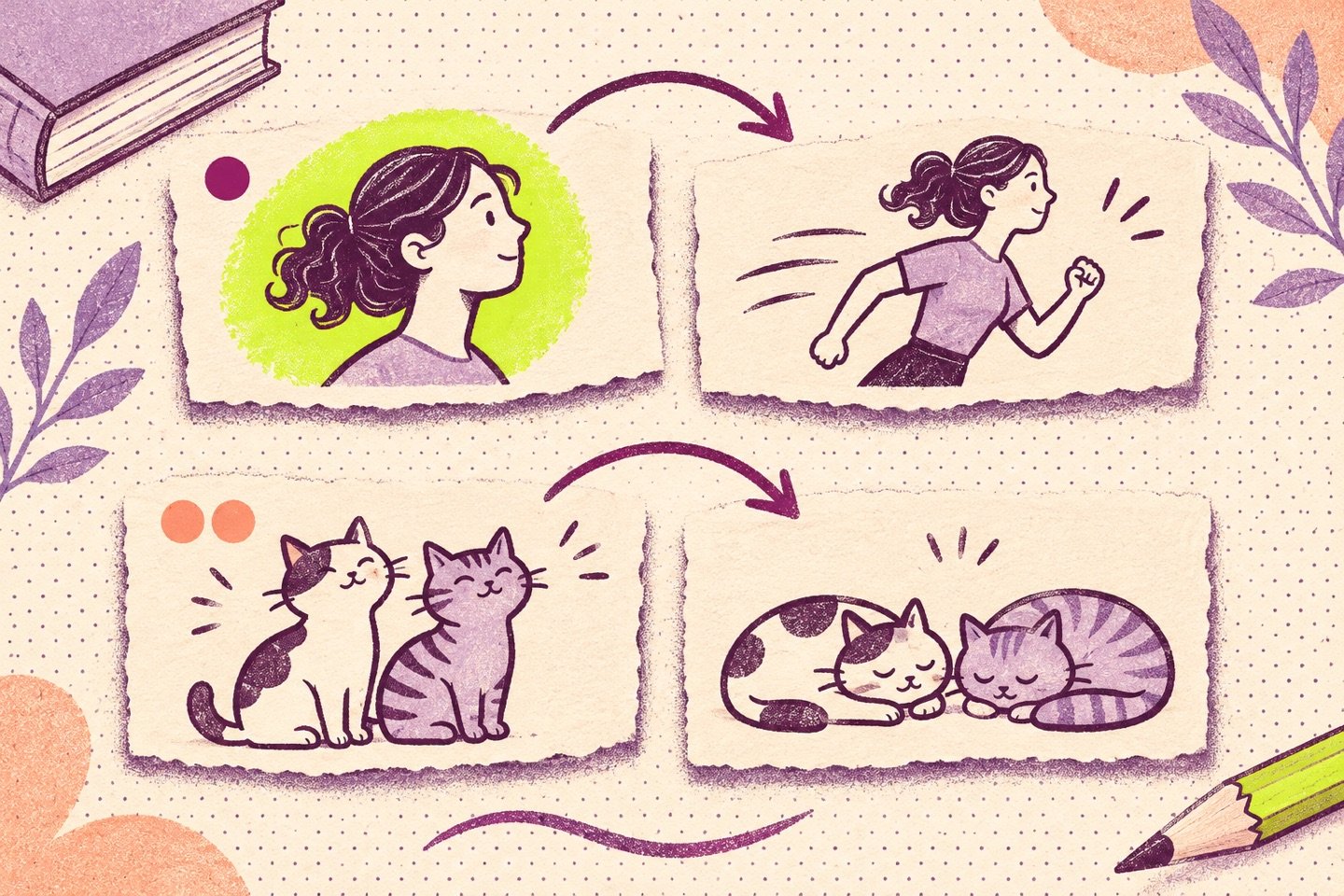
Use who for a subject and whom for an object when you’re making the formal distinction. In “Who called Maya?” the unknown person made the call. In “Whom did Maya call?” Maya made the call and the unknown person received it. In everyday English, “Who did Maya call?” is the natural choice for many speakers.
For a quick check, answer the question in statement order. “He called Maya” points to who. “Maya called him” points to whom if the sentence calls for the formal object form.
Who or whom at a glance
| Role | Example | How to check |
|---|---|---|
| Subject of a verb | Who opened the exhibit? | She opened the exhibit. |
| Object of a verb | Whom did the curator invite? | The curator invited her. |
| Object of a preposition | With whom did the curator speak? | The curator spoke with her. |
Look for the subject of the verb even when nobody is performing an action. In “Who was ready?” the unknown person is the subject of was. See subject and object pronouns for more examples of those roles. MLA Style Center on who and whom
How to use the he-or-him test
- Turn the question into a statement. For “Who or whom did Noor invite?” start with “Noor invited ___.”
- Fill the blank with a pronoun. “Noor invited him” works. The blank is an object.
- Choose the form for your context. “Whom did Noor invite?” follows the formal distinction. “Who did Noor invite?” is common in speech and everyday writing.
She and her work just as well, as do they and them. For a sentence with several verbs, first isolate the clause in which the person has a role. The test works on that clause.
Who and whom in questions and clauses
In an embedded question, look inside the question itself. In “I wonder who made the sign,” the person is the subject of made (“She made the sign”). In “I wonder whom the curator invited,” the person is the object of invited (“The curator invited her”).
Watch for a phrase such as do you think. In “Who do you think made the sign?” the person made the sign, so choose the subject form. Compare “Whom do you think the curator invited?” Here the curator invited the person, so the formal object form fits. Rebuild the part that matters as “She made the sign” or “The curator invited her.”
Relative clauses that describe a person
- “The volunteer who welcomed us wore a blue badge.” Inside the clause, the volunteer is the subject of welcomed.
- “The volunteer whom we welcomed wore a blue badge.” Inside the clause, we is the subject and the volunteer is the object of welcomed. In this type of clause, “the volunteer we welcomed” also works.
- “Noor, whom we met at the opening, showed us around.” The commas mark extra information about Noor. The clause still needs its relative pronoun, and Noor is the object of met within it.
For more on when to keep the pronoun and use commas, see the guide to relative clauses. Cambridge English Grammar Today on relative pronouns
When to use whom after a preposition
Use whom when you place a preposition directly before its object in formal writing. “To whom should I send the photos?” and “the editor with whom I worked” are examples. “To whom it may concern” is the familiar salutation.
In conversation and ordinary prose, the preposition often comes later. “Who should I send the photos to?” is grammatical, and “the editor I worked with” is a natural relative clause. The guide to sentence-ending prepositions shows when each arrangement fits. Cambridge English Grammar Today on prepositions in questions
When whom sounds natural
In an email to a colleague, “Who should I contact about the keys?” is direct and ordinary. “Whom should I contact about the keys?” suits a more formal voice. In “the applicants, three of whom had volunteered before,” the form belongs to the common construction three of whom.
If you’re editing to a house style, check the pronoun’s role first. Then choose the wording that fits your reader. Merriam-Webster on who and whom in current usage
Practice choosing who or whom
Choose the subject or formal object form for each blank. Then try saying the object examples in everyday conversation.
- ___ unlocked the gallery?
- ___ did the curator invite to the opening?
- To ___ should I send the final schedule?
- ___ did Noor say would bring the labels?
- Our guide, ___ we met at the entrance, took us upstairs.
Show the five answers
- Who. “She unlocked the gallery.” The person is the subject of unlocked.
- Whom. “The curator invited her.” The person is the object of invited. In conversation, “Who did the curator invite?” works well.
- Whom. “I should send the final schedule to her.” The person is the object of to. In everyday speech, you might ask “Who should I send the final schedule to?”
- Who. “Noor said she would bring the labels.” The person is the subject of would bring.
- Whom. “We met her at the entrance.” The person is the object of met in the relative clause.
Try the same case distinction with I and me, or use the who’s and whose guide if your question is about possession or a contraction.